


Starlink Hardware Guide: Choosing the Best Connectivity for Solar Surveillance
In the era of remote monitoring, Starlink has revolutionized how we think about connectivity. For industrial applications like Solar Surveillance Trailers, selecting the right hardware version is the difference between seamless 24/7 security and frequent power failures.
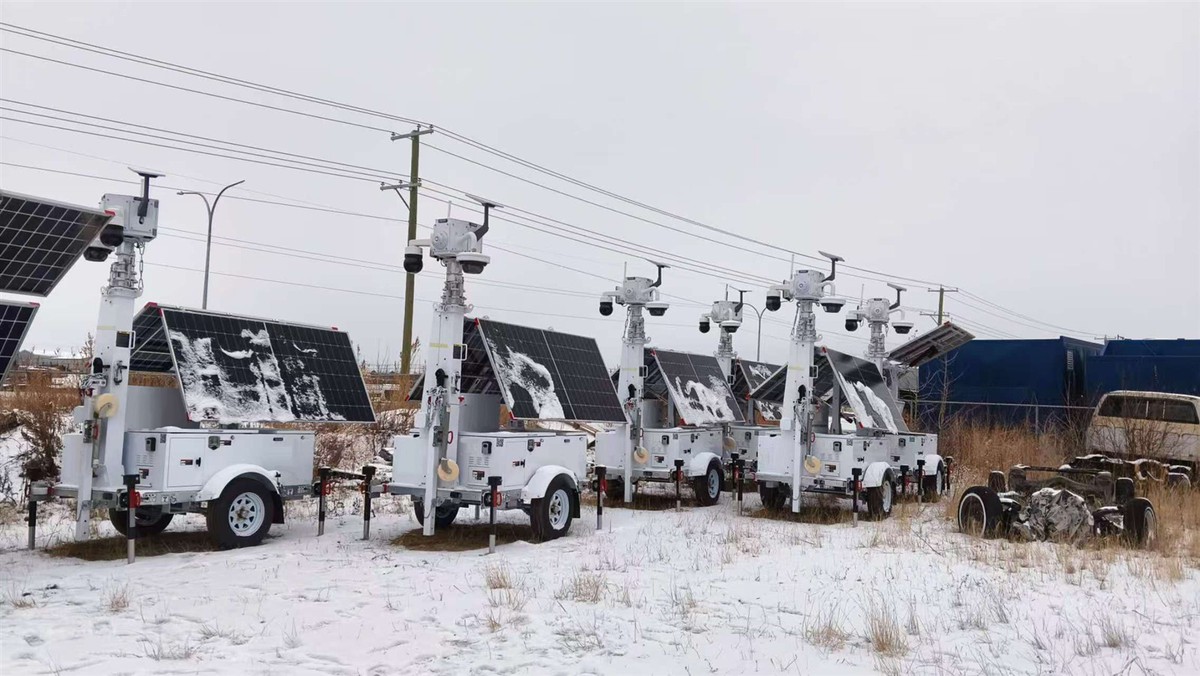
1. Starlink Hardware Versions: A Comprehensive Comparison
Over the years, SpaceX has refined its terminal designs to balance performance, power, and portability. Below is a breakdown of the primary versions available today:
| Version | Design | Average Power | Best For |
| Gen 2 (Actuated) | Motorized, self-aligning | 50W - 75W | Fixed residential use |
| Gen 3 (Standard) | Kickstand, manual alignment | 75W - 100W | High-bandwidth business |
| Flat High Performance | Fixed wedge, rugged | 110W - 150W | Maritime & Mobility |
| Starlink Mini | Compact, built-in router | 20W - 40W | Solar/Off-grid systems |
2. The Game Changer: Starlink Mini for Solar Surveillance
The Starlink Mini is not just a smaller antenna; it is a specialized tool for off-grid infrastructure. For our solar surveillance trailers, it offers three distinct advantages:
Standard Starlink dishes consume nearly 100W, which can quickly drain a trailer's battery bank on cloudy days. The Mini operates at an average of only 20-40 Watts. This efficiency allows the surveillance system to run longer without requiring massive solar arrays or expensive battery upgrades.
Integrated DC Power Support
The Mini supports 12-48V DC input directly. This eliminates the need for an AC inverter (which loses 10-15% energy during conversion), further optimizing the power efficiency of the solar trailer.
Compact All-in-One Design
With the Wi-Fi router built directly into the dish, it reduces the complexity of wiring inside the trailer cabinet, saving space for NVRs and AI processing units.
3. Starlink vs. 4G/5G: Why Satellite Wins for Security
While 4G and 5G are common, they often fail in the exact locations where surveillance is most needed-construction sites, remote borders, and rural oil fields.
Global Coverage vs. Signal Dead Zones: 4G/5G relies on proximity to towers. Starlink works anywhere with a clear view of the sky.
Upload Speed Consistency: Surveillance requires high upload speeds for 4K video streams. 4G/5G networks often throttle upload speeds in congested areas, whereas Starlink provides a dedicated, high-speed path.
Network Resilience: In emergencies or remote areas, cellular networks can become congested or unavailable. Starlink's LEO (Low Earth Orbit) constellation ensures consistent low-latency connectivity regardless of local ground infrastructure.
4. Conclusion
For the ultimate Solar Surveillance Trailer setup, the Starlink Mini is the undisputed winner. It balances the high-speed requirements of modern AI security with the strict energy budget of solar-powered systems.
