


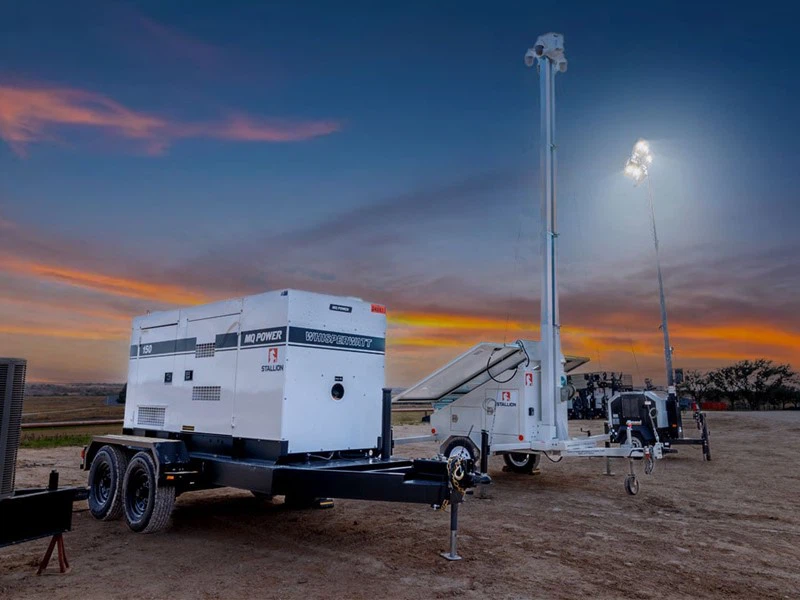
With the acceleration of global energy transition, solar-powered surveillance and lighting trailers-flexible, low-carbon outdoor power solutions-are increasingly applied in construction sites, mining areas, emergency rescue, and other scenarios. However, significant differences in sunshine duration across regions (e.g., polar nights in northern Europe, tropical rainy seasons, and intense sunlight in deserts) pose severe challenges to equipment endurance and stability.
This article analyzes the adaptive design and innovative strategies of such trailers by integrating cutting-edge industry technologies and practical cases.
I. Core Technological Breakthroughs: Comprehensive Adaptation from Hardware to Algorithms
- Intelligent Solar Tracking Systems
The power generation efficiency of traditional fixed solar panels can vary by over 40% across different latitudes. New-generation solar trailers adopt dual-axis automatic tracking technology, using photosensitive sensors to real-time monitor the sun's azimuth and elevation angles, adjusting panel orientation for optimal energy capture. For example, a patented mechanism employs electric push rods and angle-adjusting structures to maintain over 70% power generation efficiency in polar regions with extreme day/night cycles. In Nordic winters, this technology boosts daily power output to 1.8 times that of conventional solutions.
- Multi-Energy Complementary Energy Storage Systems
For regions with unstable sunlight, solar cctv trailers integrate solar-wind-mains hybrid power supply models. A typical solar camera trailer equips a 300W vertical-axis wind turbine, activated at wind speeds ≥2m/s to complement solar energy. In tropical rainforests, when consecutive rainfall reduces solar power, wind energy can fill 30% of the energy gap. Additionally, Lithium Iron Phosphate (LiFePO4) battery packs (e.g., 200Ah capacity) operate in a wide temperature range of -40°C to 60°C, with only 15% capacity loss in low-temperature environments.
- AI-Powered Energy Management Algorithms
Smart control systems dynamically adjust charging/discharging strategies by analyzing real-time meteorological data, battery status, and load demands. In periods of intense desert sunlight, the system prioritizes fast battery charging; during polar nights, it reduces non-critical device power consumption to standby mode. Case studies show this algorithm extends the cctv trailer endurance by 40% in low-sunlight regions.
II. Scenario-Specific Solutions: Adaptation to Extreme Climates from Polar Cold to Tropical Heat
- Anti-Reflective Coating for Solar Panels: Nanoscale anti-reflective films increase light absorption by 30% in snowy reflective environments.
- Heating and Thermal Insulation Technology: PTC heating modules in battery compartments activate automatically at temperatures below -20°C to maintain electrolyte fluidity.
- Low-Power Devices: LED lights use intelligent dimming, reducing brightness to 50% at night to extend illumination time.

►Tropical Rainy Regions: Heat Dissipation and Waterproofing Optimization

- Self-Cleaning Solar Panels: Hydrophobic coatings and ultrasonic vibrators enable rainwater to remove dust, ensuring stable power generation efficiency.
- Battery Thermal Management: Liquid-cooling circulation systems keep battery temperatures below 40°C, preventing capacity degradation due to high heat.
- IP67 Protection Rating: Fully sealed designs for power distribution cabinets and cameras resist heavy rain.
- High-Temperature-Resistant Solar Panels: EVA films and tempered glass with heat-resistant properties maintain 90% power generation efficiency at 70°C.
- Dust Protection Structure: Inclined solar panel brackets minimize sand accumulation; multi-layer filter cotton at air vents prevents trailer internal dust buildup.

III. Typical Cases: Application Validation in Global Extreme Environments
ANTARCTIC RESEARCH STATIONS
The "Dongda Polar Energy 2.0" system deployed at China's Kunlun Station in Antarctica uses multi-faceted solar architecture and a digital twin operation platform, supplementing 50% of energy during the polar day and reducing diesel generator usage. It also collected 400 hours of extreme daylight intensity data, providing critical parameters for polar solar energy utilization.
SOUTHEAST ASIAN TROPICAL RAINFORESTS
A mining company in Indonesia deployed solar monitoring trailers with 300W solar panels and 100Ah lithium batteries, integrated with wind energy supplementation. During the rainy season, these mobile solar trailers achieve 72 hours of continuous power supply. The intelligent system adjusts camera shooting intervals based on rainfall frequency to reduce energy consumption.
SAHARA DESERT, AFRICA
A petroleum project adopted high-temperature-resistant solar trailers, with solar panels generating an average of 2.4kWh daily to meet monitoring and lighting needs. The surveillance trailers operated for three years without failure, with dust protection design reducing maintenance costs by 60%.
IV. Future Trends: Technological Integration and Ecosystem Collaboration
- Perovskite Solar Technology
Next-generation perovskite solar panels, with a theoretical conversion efficiency exceeding 30% and a thickness 1/100th of traditional silicon panels, could increase power generation by 50% in the same area-ideal for space-constrained scenarios.
- IoT and Edge Computing
5G/BeiDou communication modules enable real-time data upload to cloud platforms, allowing dynamic strategy adjustments via weather prediction models. For example, the system can initiate energy storage mode 24 hours ahead of forecasted storms.
- Modular Design
Users can flexibly replace solar panels, batteries, and load devices based on regional needs-e.g., high-power panels for sunny areas or low-temperature-resistant batteries for polar regions.
V. Conclusion
The regional adaptability of solar surveillance and lighting trailers represents the deep integration of energy technology and scenario-specific demands. Through innovations in intelligent tracking, multi-energy complementarity, and AI management, these devices now operate stably in extreme environments ranging from -40°C to 60°C and sunshine durations of 3–24 hours.
With the popularization of perovskite technology, IoT, and modular design, Solar-powered trailers are poised to become a "standard configuration" for global outdoor energy supply, driving the low-carbon economy across diverse industries.
