


Poaching Crisis Highlights: The Survival Dilemma of Endangered Species Worldwide
Poaching is the biggest threat to iconic species around the world. Over the past decade, the global black market for illegal wildlife products (such as rhinoceros horns and ivory) has reached as much as 23 billion US dollars. This has directly led to a sharp decline in the number of endangered species like elephants, rhinos and tigers, turning the poaching crisis into a race against extinction.

Anti-Poaching Pain Points: Limitations of Traditional Monitoring Methods
Most wildlife reserves and habitats in the world are located in remote areas with rugged terrain, dense vegetation, lack of infrastructure and poor communication, which brings great challenges to wildlife monitoring and anti-poaching work. At present, rangers in most areas are only equipped with basic tools such as flashlights, making it difficult to find poachers at night and intercept illegal activities in advance. Establishing and maintaining fixed monitoring stations is even more difficult, so innovative technologies are urgently needed to solve this global dilemma.
Technological Breakthrough: Remote Monitoring Builds a Solid Anti-Poaching Line of Defense
Surveillance Cameras Technology has become a key breakthrough in global anti-poaching work. With the advantages of accuracy, efficiency and all-weather operation, remote monitoring technology has become an "intelligent sentinel" to protect wild animals.
According to the characteristics of different habitats, remote cameras can be strategically deployed at key locations such as core areas, species migration routes and smuggling routes. They can monitor suspicious activities in real time and capture evidence of illegal behaviors. Equipped with thermal imaging technology, they can help rangers clearly "see" the monitoring area at night, focus on preventing smuggling and curb the trade of illegal wildlife products from the source.
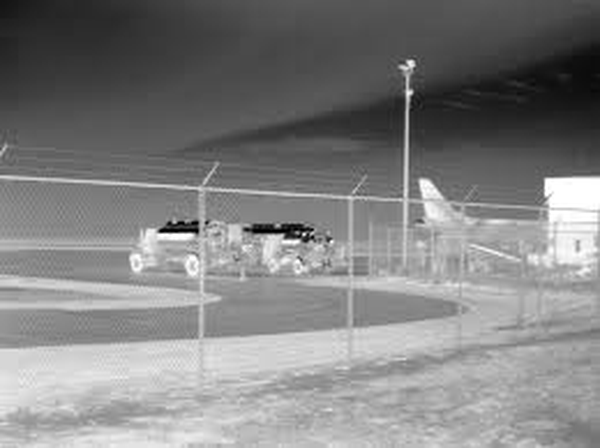
The cameras are equipped with advanced infrared technology, which can take high-resolution images even in low light or at night. This not only helps rangers monitor poaching activities, but also provides valuable data for wildlife research. Their built-in AI can automatically identify people, vehicles and wild animals, send real-time alarms, trigger rapid responses, reduce the pressure of rangers' foot patrols, and realize all-weather real-time virtual monitoring. At the same time, the efficient operation of remote monitoring relies on stable connection and power support. Built-in Wi-Fi or cellular network functions enable real-time data access, and solar panels and long-life batteries effectively solve the power supply problem in remote areas.
Professional Empowerment: BIGLUX One-Stop solar security Anti-Poaching Solutions
As a global leader in mobile solar security solutions, BIGLUX has been deeply engaged in the field of ecological protection for many years. Based on rich project experience accumulated from users around the world, it has developed a series of mobile solar monitoring towers to protect endangered species with professional technology. Among them, theHiGuard solar monitoring tower under BIGLUX specifically solves the core pain points of monitoring in remote habitats:
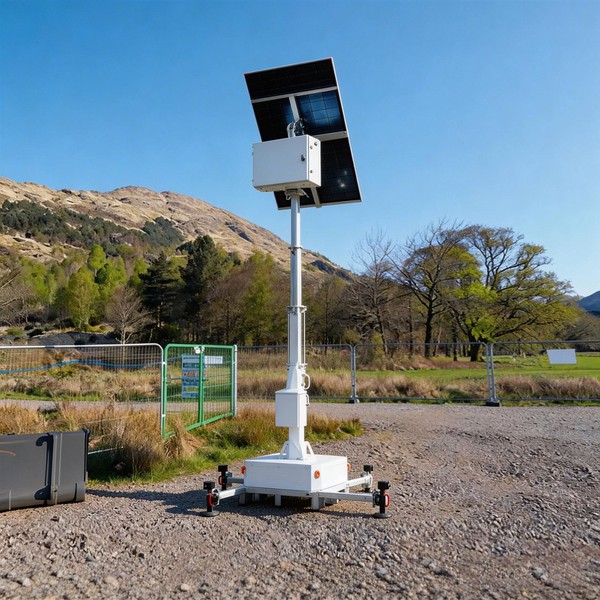
It is equipped with a high-power solar power supply system, a remote MPPT management system and a large-capacity backup battery. Even in areas with continuous rainy days and insufficient light, it can continuously provide stable power for monitoring equipment, completely solving the power supply problem in remote areas.
The detachable mounting plate is flexible and convenient, supporting plug-and-play of various brands and models of monitoring cameras on the market. No complex debugging is required, which greatly reduces deployment costs and time.
The liftable heavy-duty steel telescopic pole can flexibly adjust the lifting height according to the vegetation height of the habitat and monitoring range needs. Combined with the design that can rely on a trailer chassis or a forklift chassis, it can realize rapid deployment in any area, minimizing the restrictions of terrain and road conditions.
The equipment is treated with professional hot-dip galvanizing process and equipped with a high-strength weather-resistant shell. It has the advantages of waterproof, dustproof, rustproof and high and low temperature resistance, and can adapt to various complex outdoor environments such as tropical, frigid and plateau areas, ensuring long-term stable operation.
In addition, in large-scale anti-poaching projects, the HiGuard monitoring tower can flexibly replace components and be upgraded to a signal tower, building a complete communication infrastructure to realize real-time linkage between monitoring equipment and managers and break through communication barriers.
In addition to the HiGuard monitoring tower, BIGLUX has also launched high-power series products such asHiSOLOsolar security trailer and HiSTAR hybrid CCTV tower, which fully meet the anti-poaching monitoring needs of different scenarios and scales.
With profound technical accumulation, rich project experience and a complete product system, BIGLUX provides comprehensive and customized solutions for global anti-poaching work and wildlife protection, solves the monitoring problems in remote areas, helps protect the survival hope of endangered species around the world, and promotes the sustainable development of ecological protection cause.
FAQ
Q: What cameras do you recommend for anti-poaching?
A: Cameras such as infrared thermal imaging cameras, panoramic cameras, and low-light cameras are suitable for anti-poaching scenarios.
Q: Do you provide cameras together or only bare units?
A: For users who already have cameras, we can provide only the power supply unit. If not, we can recommend cameras from our camera series, and we usually use Hikvision or Uniview cameras.
Q: What other options do you have besides HiGuard?
A: HiGuard is our small unit. We also have medium-sized units such as HiSOLO and HiSITE, as well as heavy-duty units like HiSTAR.
Q: How does the HiGuard solar CCTV tower system work?
A: The HiGuard system consists of a 450W solar panel and a backup battery pack of up to 4KW. It is equipped with POE internally to enable plug-and-play functionality for different cameras and devices.